New book · April 1, 2026
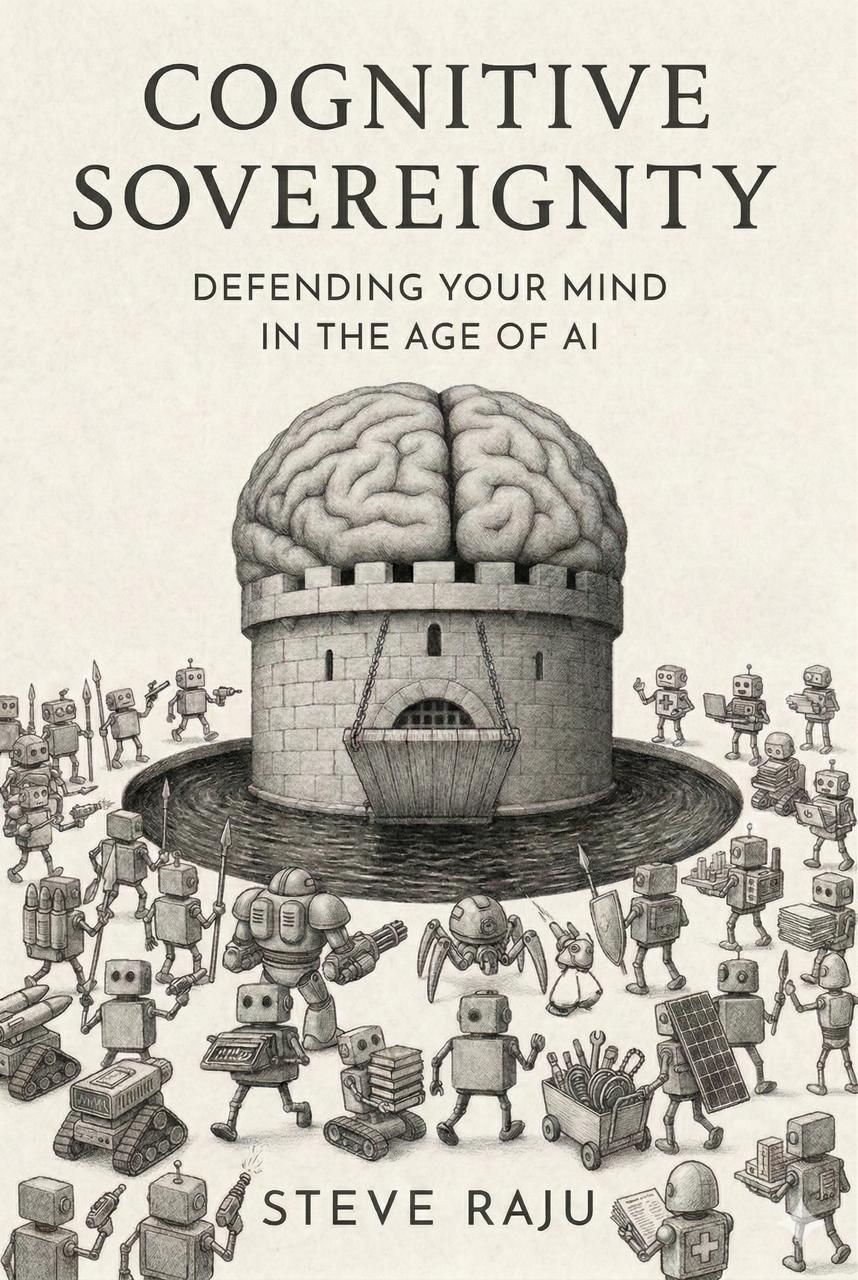
Defending Your Mind in the Age of AI
The central idea
When you still look like you're thinking for yourself — but the actual thinking stopped happening somewhere around six months ago.
During the Cold War, "Finlandization" described countries that kept their flags and their parliaments — but deferred to Soviet influence in every decision that actually mattered. Independence on paper. Dependency in practice.
You're still writing. Still deciding. Still signing your name on things. But ask yourself honestly:
When was the last time you wrote a first draft that was entirely yours?
Problems don't get thought through anymore. They get typed into a box. You've forgotten that's a change.
You produced the document. But if someone pushes on the reasoning, you're already reaching for the tab.
That two-minute discomfort before an idea forms? Intolerable. The cursor blinks once and you're gone.
You read it, it sounds right, you move on. The part of your brain that used to say "wait, really?" has gone quiet.
The problem arrives, and before you've spent thirty seconds on it, you're typing a prompt. Thinking has become optional.
You used to have opinions. Specific ones. Now they tend to come out reasonable, balanced, good-on-both-sides. AI-shaped.
Inside the book
The Comfortable Cage
How convenience degrades capacity — the neuroscience of cognitive atrophy and why it's accelerating.
Mapping Your Cognitive Nation
The four territories most at risk: critical analysis, creative thinking, metacognition, and complex decision-making.
The Superpower Next Door
What AI actually is — a pattern-completion engine, not a thinking machine — and why that distinction changes everything.
Cognitive Finlandization
The warning signs that your intellectual independence is becoming nominal. How smart people lose it without ever deciding to.
The Sovereign Protocol
A three-principle strategy for engaging with AI without being absorbed by it.
Defending Your Borders
Specific practices for protecting critical analysis and metacognition — the gatekeeper capacities.
The Creative Frontier
Why letting AI generate means you never develop the taste to evaluate. How to use it as a sparring partner instead.
The Judgment Seat
Some decisions can't be computed, and they tend to be the ones that matter most. Outsourcing those to a recommendation engine isn't efficiency... it's handing away something you can't get back.
The Sovereign Mind in Practice
Daily habits, AI-free zones, first-draft-independent protocols. Moving from passive dependency to active partnership.
Beyond the Border
Why cognitive sovereignty will become a rare and valuable virtue — and why the time to protect it is now.
Is this book for you?
The author
Steve Raju has spent his career watching what technology actually does to people — not in theory, but up close. He started as a programmer, shifted into copywriting and marketing, and for the last several years has been helping businesses adopt AI as a consultant.
That last job is what made this book necessary. When you spend your days getting companies excited about AI, you also spend your days watching the human side of the equation go unexamined. People optimising for output while something quieter heads the other way.
He completed Stanford's Machine Learning Specialization, runs Conversion Pioneers, and lives in Vancouver with his family. He uses AI constantly — which is how he noticed something was wrong.
Exclusive for waitlist members
Everyone who buys on April 1 gets instant access to bonus chapters that go deeper into the ideas in the book. Get on the waitlist and you'll receive them automatically.
Move 37
When AlphaGo made a move no human would make — and won — Lee Sedol called it "fair" and "not fair" in the same breath. That tension is a philosophical dispute that has shaped every AI policy decision ever made. Which side wins determines whether human thinking has a future worth protecting — or whether "cognitive sovereignty" is already a lost cause.
The Vegas Protocol
Casino designers discovered that when you remove clocks, hide exits, and engineer the soundscape just right, people lose track of time — and money. The same architecture is now built into every feed, platform, and AI system competing for your attention. This chapter is the exit sign they don't want you to find.
The Gadfly and the Chatbot
Socrates never gave a straight answer. He asked questions until your certainty collapsed — because the struggle to understand is not an obstacle to knowledge. It is knowledge taking shape. AI does the opposite: confident answers before you've finished asking. The ancient Greeks would have marveled at these systems. They also would have seen exactly what was being traded away.
Your New Job Title
The job you were hired for is already half-automated. The job that replaces it requires a skill set nobody put in the original posting. This chapter defines what humans actually do in a world where AI handles everything else — and why that role is more valuable, not less, if you can see it clearly enough to claim it.
Sample 4-Week Plan For Establishing Sovereignty
A structured, day-by-day framework for rebuilding the cognitive capacities that atrophy quietly in an AI-saturated world. Not a digital detox. Not a retreat. A protocol you run alongside your normal life — one that measurably strengthens your thinking, your focus, and your independence in 28 days.
It opens with a gecko. It ends with a question you won't be able to stop thinking about.