Cognitive Sovereignty is out now. Q2/Q3 consulting calendar is filling. Check availability →

Work with Steve Raju

Your organisation uses AI every day. When something goes wrong, who owns the decision?

Most organisations have an AI strategy. What they do not have is a clear answer to where AI is making decisions that should belong to a person — or a way to know when that line has been crossed. Steve works with organisations that want that answer before they need it.

See how we could work together →
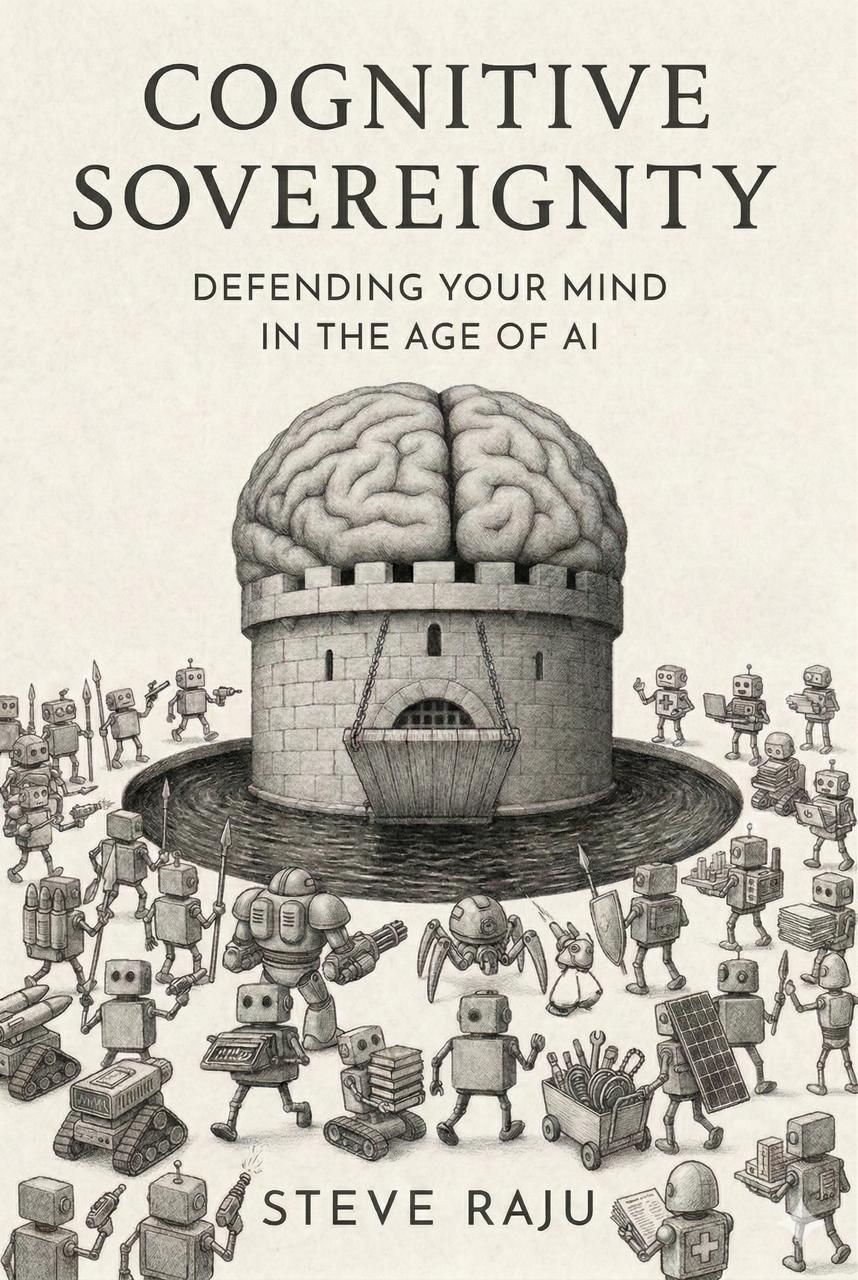
Cognitive Sovereignty book cover

Published April 14, 2026

Cognitive Sovereignty: How To Think For Yourself When AI Thinks For You

Most AI books are about how to use it. This one is about what happens when you do — and what the organisation that pays attention to that question early gets right that the others miss. The book is the foundation for every engagement Steve delivers.

Three conversations

Which one is yours?

The same problem looks different depending on where you sit in the organisation.

Strategy — CEO, MD, CTO, board

You have an AI strategy. You do not have a way to measure whether it is producing better decisions or just faster ones.

Somewhere in your organisation, AI output is advancing unchecked into work that carries your name. You cannot yet see where. The organisations that find it first will set the standard others are measured against.

Operations — COO, VP, Directors, Heads of Dept

Your team is producing more than it did twelve months ago. You are also seeing more rework.

More revisions. More things that looked finished but were not. The cause is almost certainly connected to where AI output is being accepted without a quality gate. That gap is findable and fixable.

Support — CHRO, L&D, Talent Directors

You are investing in AI tools and AI training. Nobody is protecting what AI is quietly removing.

Gartner's 2026 research predicts 50% of global organisations will require AI-free skills assessments this year due to critical thinking atrophy. You need a framework for protecting human capability alongside AI capability.

I can see a number of ways we could work together to address this. Depending on where you are and what feels like the right entry point, any of the following gives you a clear answer to what is happening and a documented way to address it.

The Sovereignty Partnership

For organisations ready for the full picture

$110,000–$150,000 / year

£90,000–£120,000

You need an organisation-wide answer to where AI is creating risk — and a documented operating procedure your teams can work from, train against, and update as the tools change. You want that capability to outlast the engagement.

A complete audit of AI use across your key functions. A Workflow Map of every AI touchpoint — classified by risk, benchmarked for quality, redesigned where judgment needs to come back. Quarterly leadership sessions as AI tools evolve. Monthly team workshops as needed. Async advisory access for major AI adoption decisions between sessions. At twelve months: a documented internal capability your organisation owns and operates independently.

Quarterly half-days for leadership. Monthly sessions for teams as desired. No weekly calendar obligation.

12 months. Annual renewal conversation built into the cadence.

The Sovereignty Sprint

For organisations ready to address their highest-risk workflows now

$55,000–$75,000

£45,000–£60,000

You know AI is embedded in your most important work. You do not know which touchpoints carry meaningful risk and which do not. You need that picture within a quarter, along with written standards and redesigned workflows that hold under deadline pressure.

A full audit across two or three key teams. A complete Workflow Map for each team — every AI touchpoint classified, benchmarked, and owned. Workflows redesigned so human judgment is back where it belongs without losing the productivity gains. Written output standards documented and signed off. A 90-day calibration session that delivers a before-and-after your leadership can act on.

20 minutes per team member for pre-engagement survey. Two to three workshop sessions per team across 90 days. One calibration at 90 days.

90 days. No ongoing weekly commitment.

The Sovereignty Intensive

One day. The immediate picture.

$30,000

£25,000

Your leadership team needs to see the AI dependency picture before it can decide what to do about it. One day gives you that — and the shared language to act on it.

A Workflow Survey sent five to seven days in advance. Each participant completes it in 20 minutes. Steve synthesises and arrives already knowing where the most likely exposures are. The day is more precise because of it.

  • Where AI is currently making decisions in your organisation — including the ones nobody knew about
  • Where each leader's judgment is producing irreplaceable value — and where it is being quietly handed off
  • Each person names their three highest-risk AI touchpoints and leaves with a personal decision rule
  • What your organisation's accumulated knowledge makes possible that AI cannot replicate — and how to use it

Cognitive Dependency Map

Judgment Portfolio Summary

Intention Audit

Knowledge Asset Record

A 90-minute Strategic Implementation Review. A working session — not a follow-up call — in which Steve reviews what has changed, what new questions have surfaced, and what the logical next step looks like if one is warranted.

20 minutes for pre-engagement survey. One full day. One 90-minute review at 30 days.

North America and the UK. Remote delivery available.

Most organisations start with the Intensive. It gives leadership the picture they need to make an informed decision about whether the fuller work is warranted. Some go on to the Sprint. Some go to the Partnership. Some apply what they found independently. All three are legitimate outcomes. The Intensive is designed to be useful on its own terms.

Speaking engagements

Three talks. Each with a specific argument.

Steve speaks at leadership conferences, corporate events, and executive offsites across North America and the UK. Available as a 45-minute keynote, 90-minute session, or half-day workshop. Every talk has a specific argument, not a round-up of AI news.

Signature keynote

Cognitive Sovereignty: How to Use AI Without Losing the Edge That Makes You Valuable

Your audience learns exactly why AI is quietly making experienced thinkers less reliable — and what to do about it. Not an anti-AI argument. The case for using AI more aggressively while getting sharper rather than dependent. The talk that makes leaders reconsider every rollout they have already approved.

For leadership and executive audiences

The Judgment Economy: The Decisions AI Cannot Make — And Why They Are Worth More Than Ever

As AI takes on more execution, the decisions that cannot be handed to a model — direction, culture, trust, high-stakes calls in ambiguous situations — become rarer and more valuable. This talk makes the case that AI adoption done well is a reason to invest more heavily in the judgment machines cannot replicate.

For teams using AI tools every day

Editors of Intention: The Human Skill That Matters More Than Any Prompt

When AI can do most of the doing, what is left for the human is the intentionality — knowing what you actually want, why you want it, and whether what you got serves that purpose. Most people using AI daily are outsourcing this part too. This talk names the shift, shows how to practise it deliberately, and makes the case that it is the most teachable and most undervalued skill in any AI-equipped team right now.

More keynote topics available — see the full speaking page.

Steve Raju

About Steve

Steve Raju

Steve started as a programmer, became a copywriter, and spent the last several years working with organisations on what AI adoption actually costs the people inside them. He completed the Stanford Machine Learning Specialisation, which means he understands how the systems work. His book, Cognitive Sovereignty, is the documented argument — published April 2026.

Check availability

Book a conversation

Steve takes a limited number of new engagements each quarter. If your organisation is in the right place for this work, the right place to start is a direct conversation.

Prefer to write first?

Steve reads every message personally.